
Greetings!
This post was supposed to air on December 4th, but it didn’t go as I planned. Nevertheless, it’s airing now!
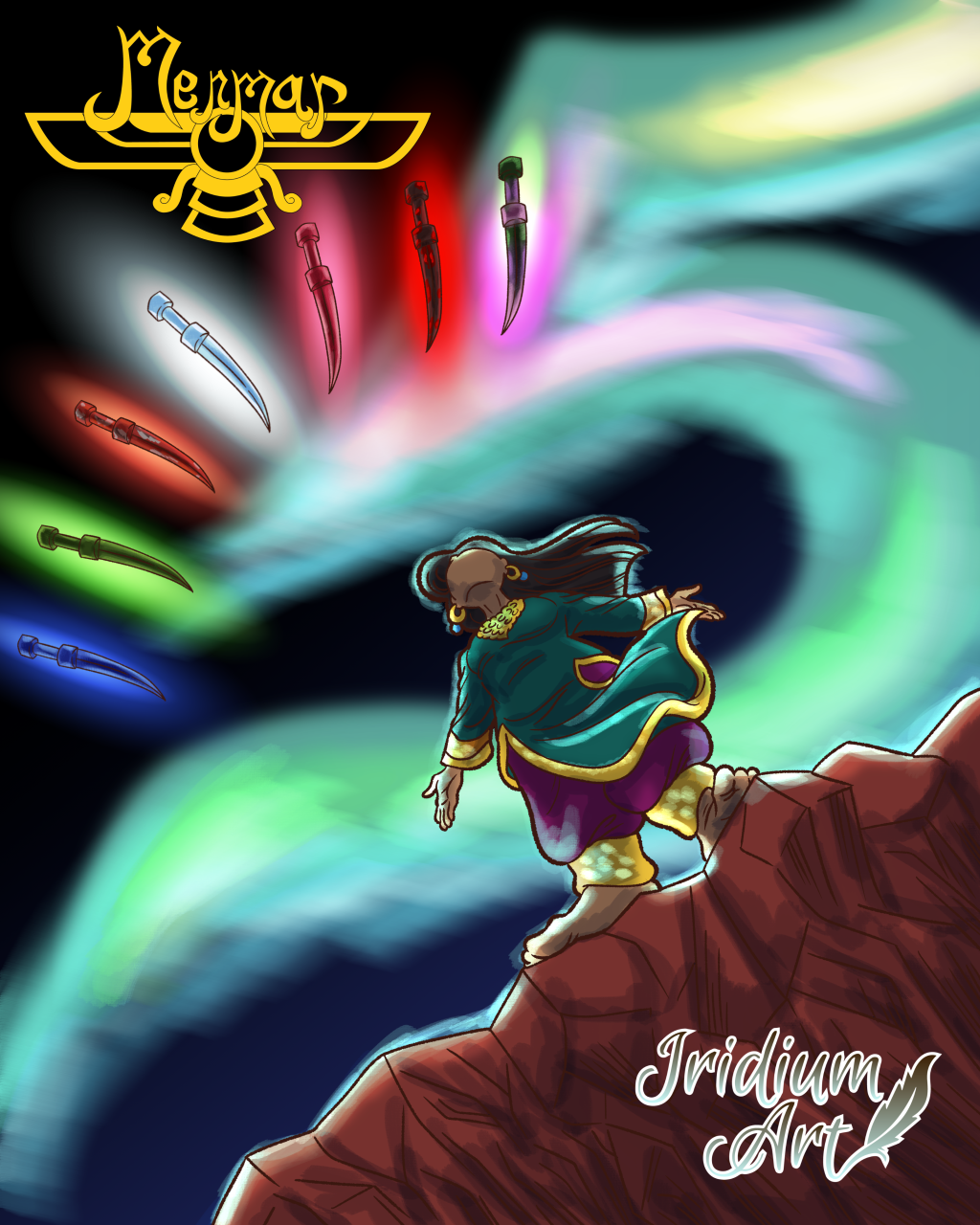
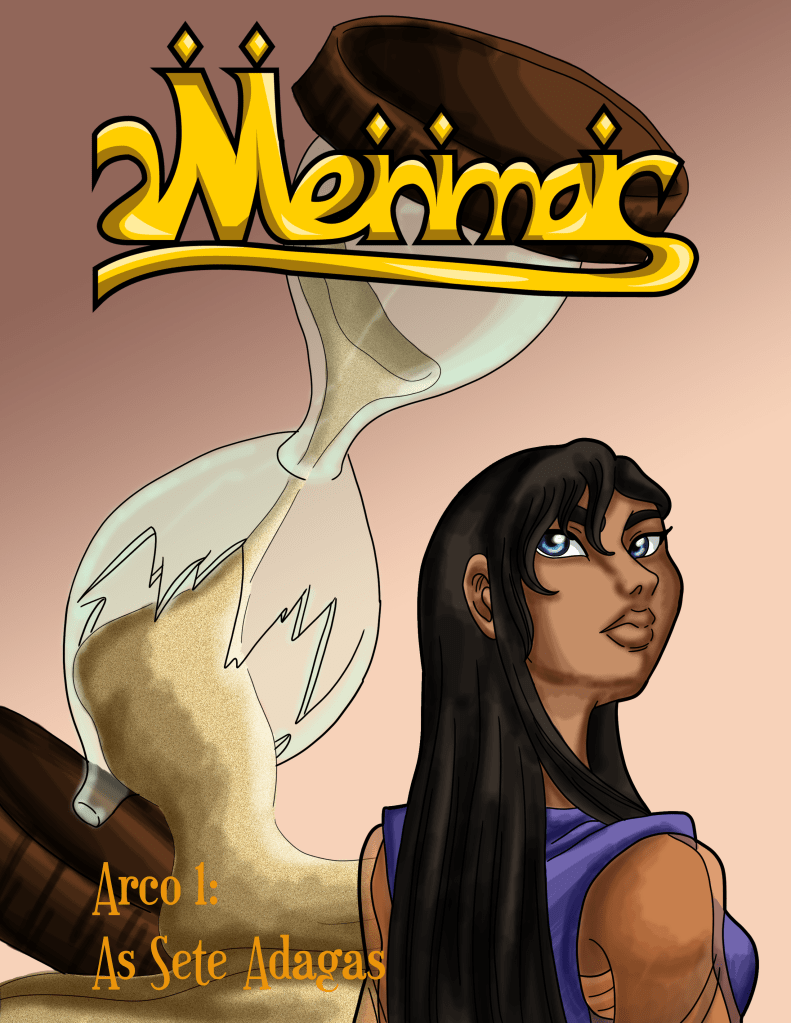
Menmar’s hitting a huge milestone this year – five years since it was first published! Five years ago, Menmar made its debut on Tapas, both in English and Portuguese, marking my return to both comic books and writing scenes. However, Menmar’s timeline goes back 11 years, to be more precise.
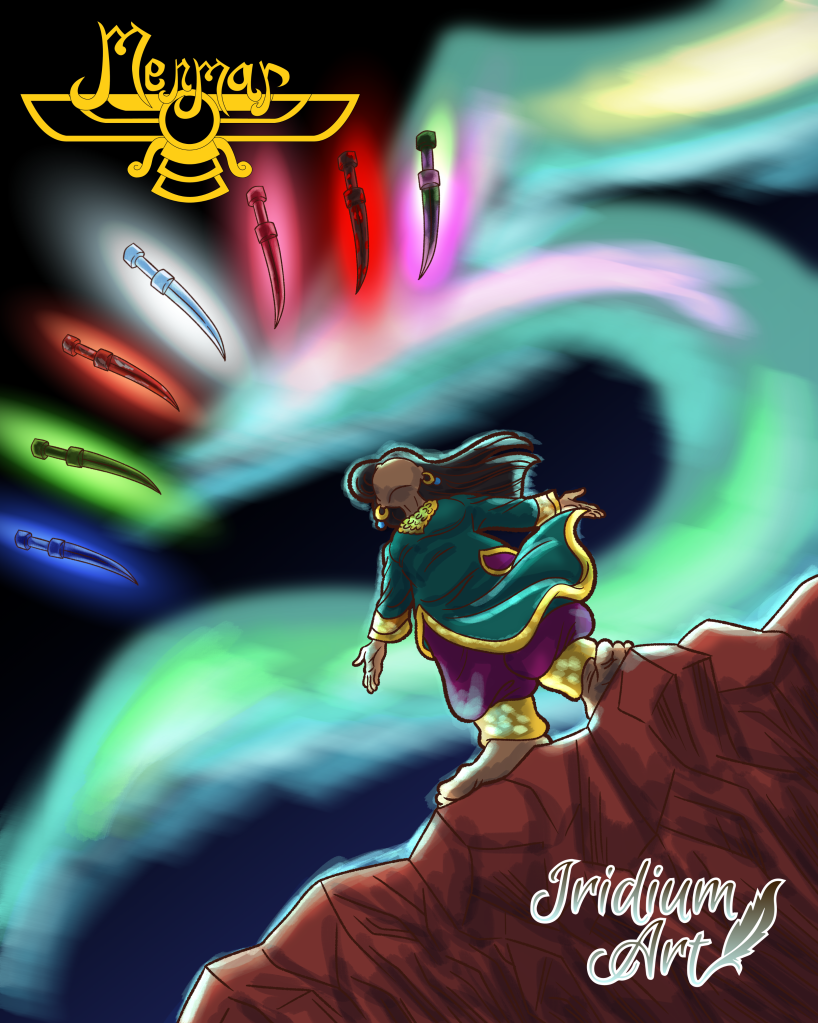
Menmar – The Pilot and Beginning (2014)
Early Mockups and Pilots
Menmar’s first designs, concept arts and narratives were conceived on 2014; back then, I was on my sophomore year on college and I was facing a massive art block. I had one class named “Oficina de Maquetes e Modelos” (trans.: “Mockups and Prototypes Workshop“), which taught young designers how to create mockups and prototypes to present their projects in physical media. While it was a subject focused on Product Design, there were several assignments fit for those that belonged in Graphic Design – which was my case.
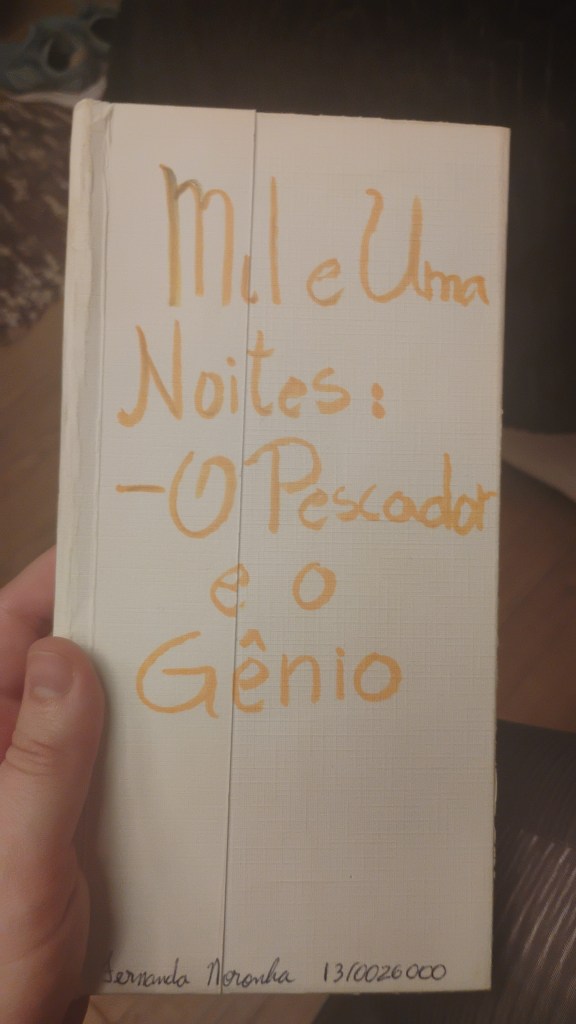
One of those assignments consisted on creating a pop-up book from scratch, ranging from overall aesthetics to pop-up mechanics, being the latter the main purpose and focus of said assignment. Back on that year, I was already a bellydance student and I was heavily focused on my classes and the possibility of becoming a professional dancer, which made Arabic and Levantine/ Middle Eastern themes the heaviest sources of inspiration for my artworks.
Therefore, I chose to make a pop-up book featuring the heaviest reference for Menmar’s narrative: One Thousand and One Nights’ “The Fisherman and the Jinn”, one of the short-stories told by Persian princess Shahrazad to the dangerous King Shariar. That pop-up book was, in a way, the pilot for what Menmar would become.
Early Plots and Design (2014-2016)
I was fully obsessed with Levantine and Persian motiffs and that obsession became the founding stone of Menmar. The narrative was pretty much the same as it currently is: a girl (Nadhine) finds an exquisite jewel hiding a Jinn (Raheem) and temporaly becomes her Master as the two work on a way to free him. Esther, Nadhine’s best friend and surrogate sister, was also present, along with her husband Yami and Nadhine’s accomplices Arash, Ardashir, Navid and Mirza (who were – and still are – a set of twins).
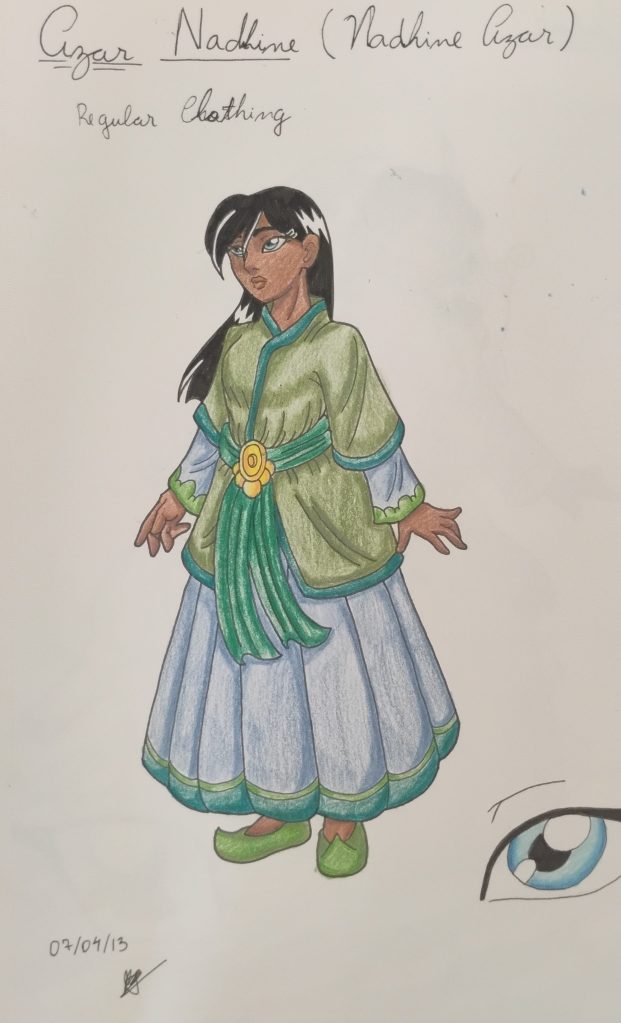
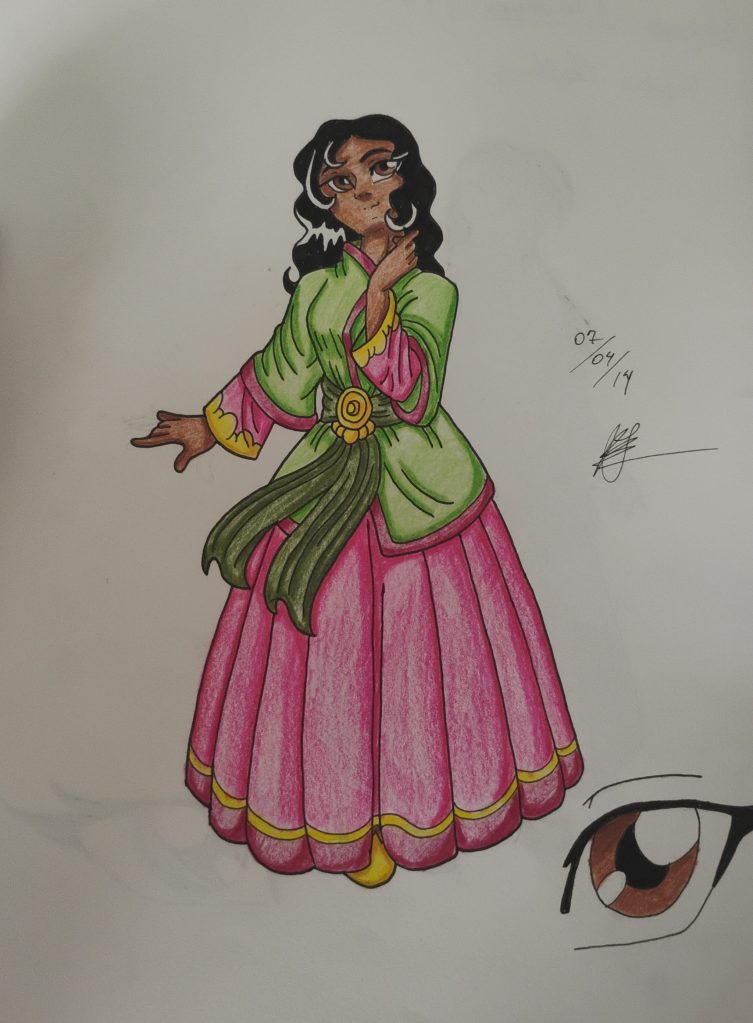
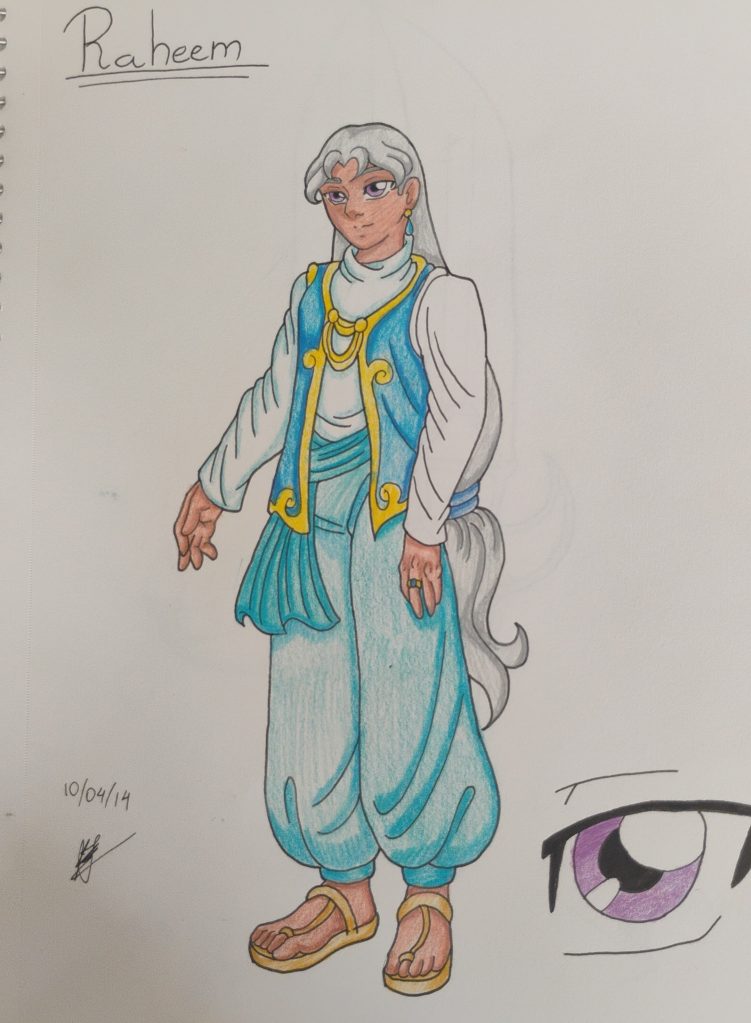
However, their backgrounds were slightly different – instead of growing up as a struggling orphan of a blacksmith and a seamstress, Nadhine was a low-ranking member of Azoria’s nobility, much like Esther was. Yami was originally a blacksmith raised to nobility and the two sets of twins were the only members of the peasantry.
Omid, Paiman, Gul and Jahan didn’t exist in the first drafts; back in 2014-2015, I imagined the overall cast to be even smaller than it already is, and the narrative focused more on Nadhine, Raheem, Esther and Yami and their point of views, rather than the intertwined guidelines which I adopt today.
Also, the Seven Daggers had not only different colours, but different shapes, made to fit their respective narrative and plot devices. Their described colours remained the same as they are today, but they have one standard shape for all.
Nadhine’s double life as a rebel and assassin remained the same across all versions. The changes were the colour schemes and weaponry design, which seemed more as concept tweaks than actual retconnings.
The greatest change, perhaps, was the medium – Menmar was originally written as a novel/ book with 28 chapters overall. The chapter amount is still the same, but I adapted the narrative to fit the comic book format as you currently know.
Art Blocks, Hiatus and Other Projects (2016-2019)
When I entered college, in 2013, I didn’t expect to get disappointed at my chosen degree (Graphic Design, otherwise known as Industrial Design back then) and face a massive art block after a project gone wrong. For three to four years, I only had strength to draw what I was told to, and I didn’t feel remotely comfortable with drawing for myself and my projects.
These events made me drop my DeviantArt account (which I recovered in 2025) and most of my non-academic artworks, aside from a few, punctual works for my closest friends at that time.
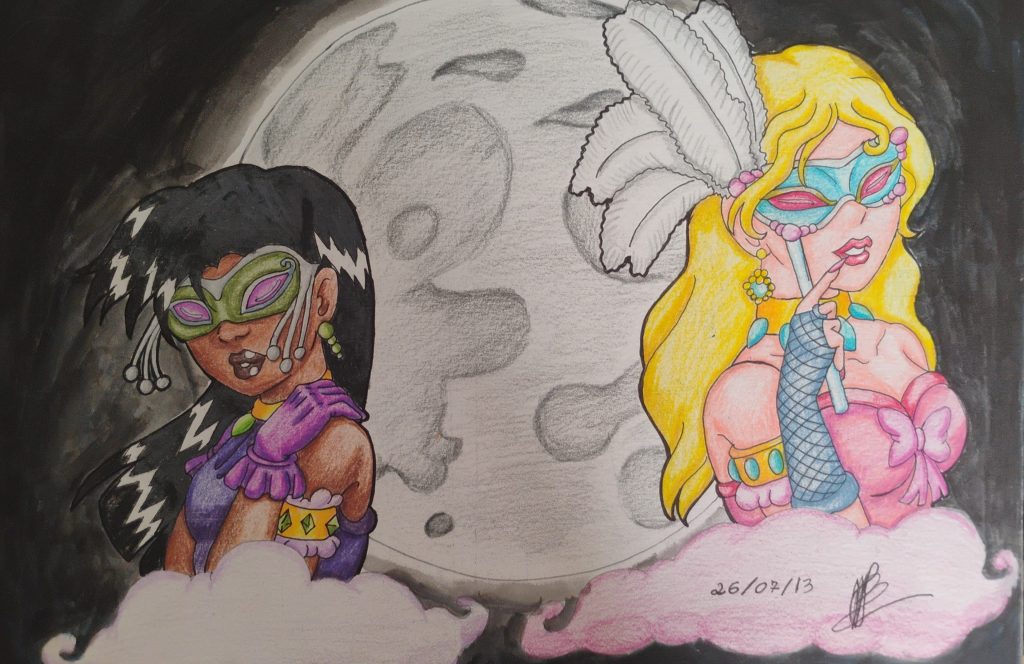
However, if my hands and my mind wouldn’t resort to drawing, I immersed myself in writing; I invested in finishing older fanfictions (yes, I was one of those), older authoral projects (like the first version of The Blue Moon Knights, which I consider to be my magnum opus, but it’s currently unavailable due to future plans), anything which I imagined and wanted to bring into life somehow. Most of those projects were, however, shelved or even deleted, for I wasn’t happy with how they turned out.
It was also the pinnacle of my bellydancer activity, with my nights filled with classes, festivals, workshops and even paid presentations. Along with my internship (which was mandatory for my graduation), bellydancing helped me make amends with my artstyle and the feedback I got years before, which paved the way for me to get back drawing and begin working as a professional illustrator.
I didn’t feel ready to work on comic books, though. I still felt hurt and betrayed, and I didn’t see myself as an artist – but as designer only, put simply.
Revamp, COVID Pandemic and Debut (2020)
In 2018, I felt safe enough to work on concept arts and portraits, so I began offering my services online. But it wasn’t until January 9th, 2020 that I formally (re)announced myself as a professional artist in digital spaces in the form of my Instagram account.
I was warmly welcomed during the pandemic period, in which I received many commissions and proposals. During that time, I looked back at Menmar, which was a shelved project, and decided to make a few changes.
The first one was the setting – being a story based a Levantine classic that carried different cultural folklores and references, it didn’t feel right to make Menmar entirely Arabic-based. Moreover, it didn’t feel right to make it Arabic at all, for Menmar was set on some sort of Late Antiquity period. So, the first change I made was to gaze upon Persian and Iranian history and heritage, thus making Menmar a Persian Zoroastrian-inspired narrative.
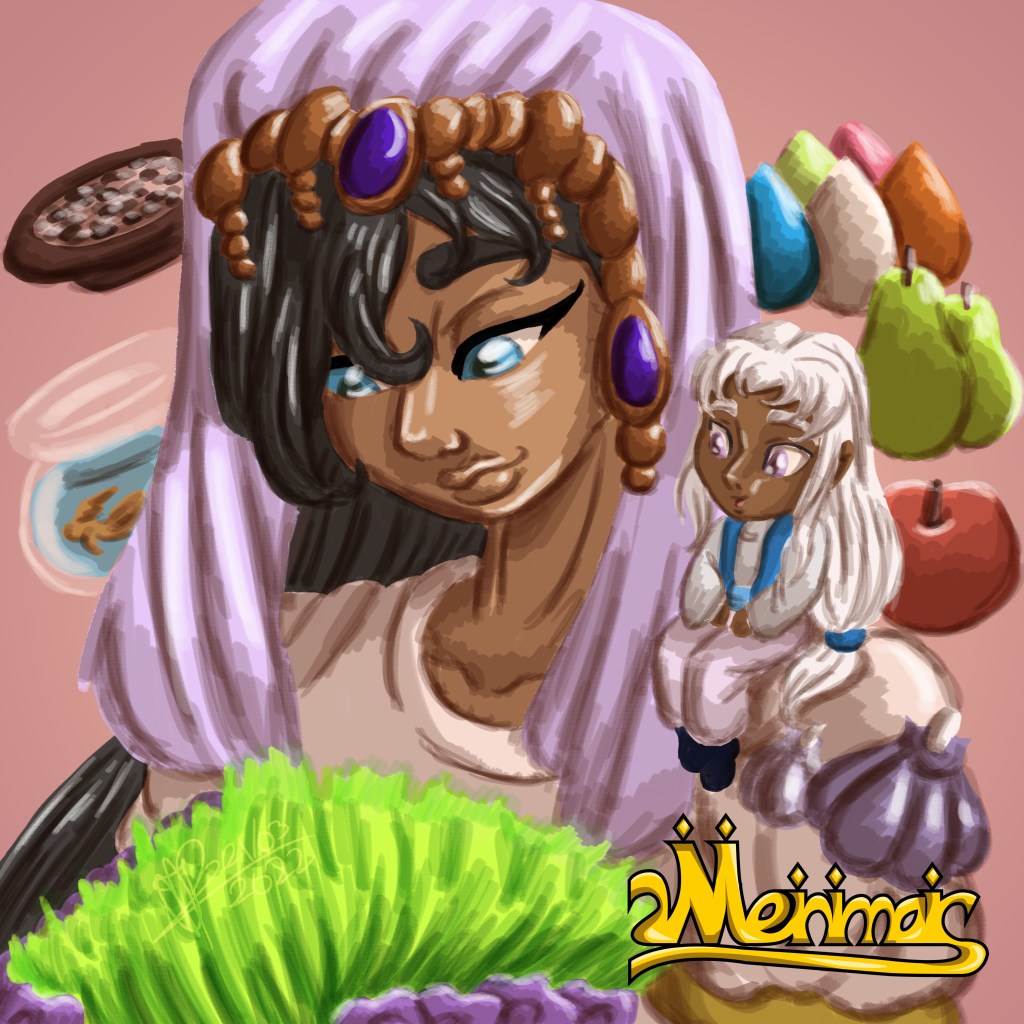
The Jinn plot device was kept, with their names changed to feel more Persian-pronounced (Janni) and their narrative significance expanded, with Raheem being more of a refugee from his destroyed dimension rather than merely a magical butler of sorts, which gave him even more importance regarding the quest for the Seven Daggers.
Nadhine’s social stratum changed, making her part of the peasantry in the form of a blacksmith to further give her an opposite social scenario regarding Esther, giving me two different social and life perspectives work on; also, Nadhine’s clique got expanded, and thus Omid, Paiman, Gul and Jahan were added into the fold to make social interactions even more complex.
Nadhine and Raheem’s encounter also changed from a happy accident to a life-saving situation which enhanced the impact of the first three chapters, in my humble opinion. I also added enriched lore and setting as my researches delved deeper into Persian and Zoroastrianism’s timelines and overall aspects.
I finally felt brave enough to work on comic books as I’ve always wanted. So, for the better part of 2020, I began rewriting chapters, making concepts arts for the main quartet (Nadhine, Esther, Yami and Raheem) as I prepared for the comic debut. I chose to publish it online, due to the pandemic and reduced production costs, and Tapas was the chosen platform at that time, with both English and Portuguese versions available as free-to-read (which is the current form of distribution at that moment).
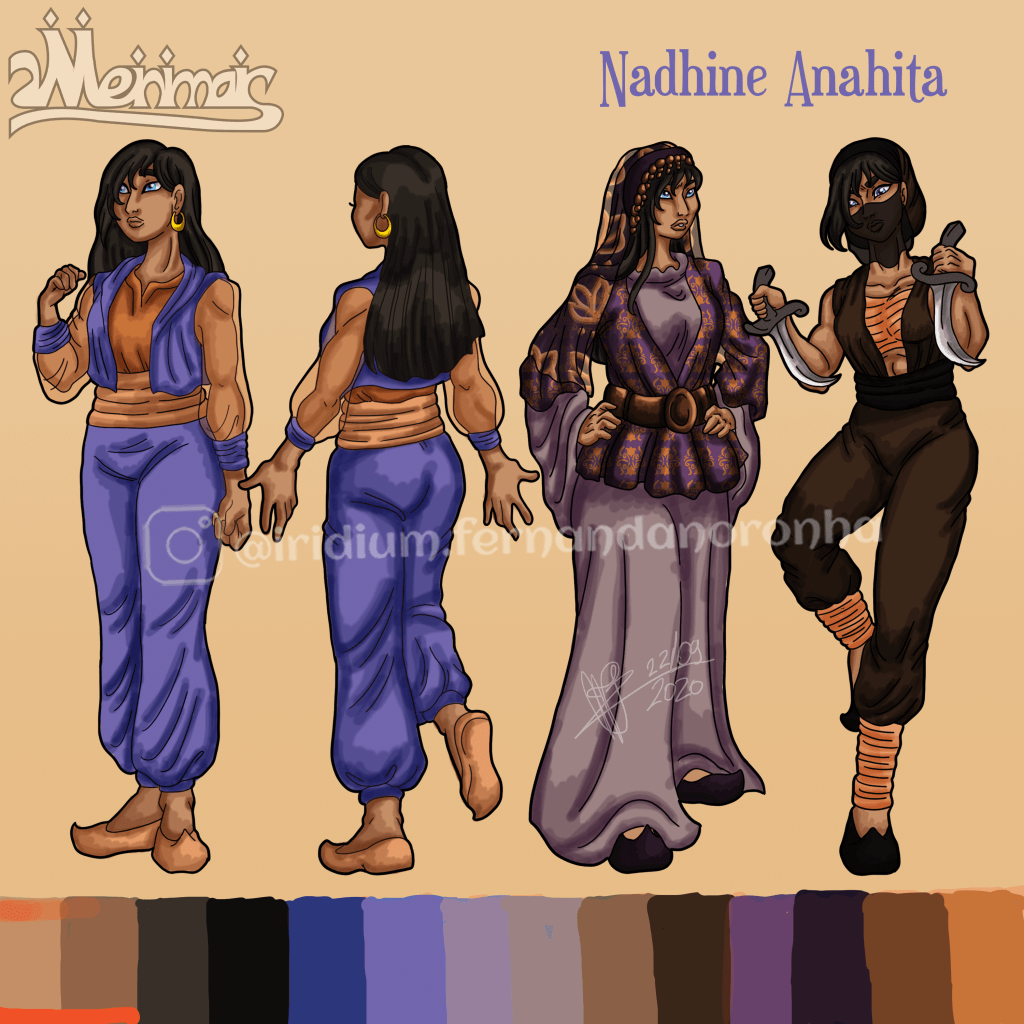
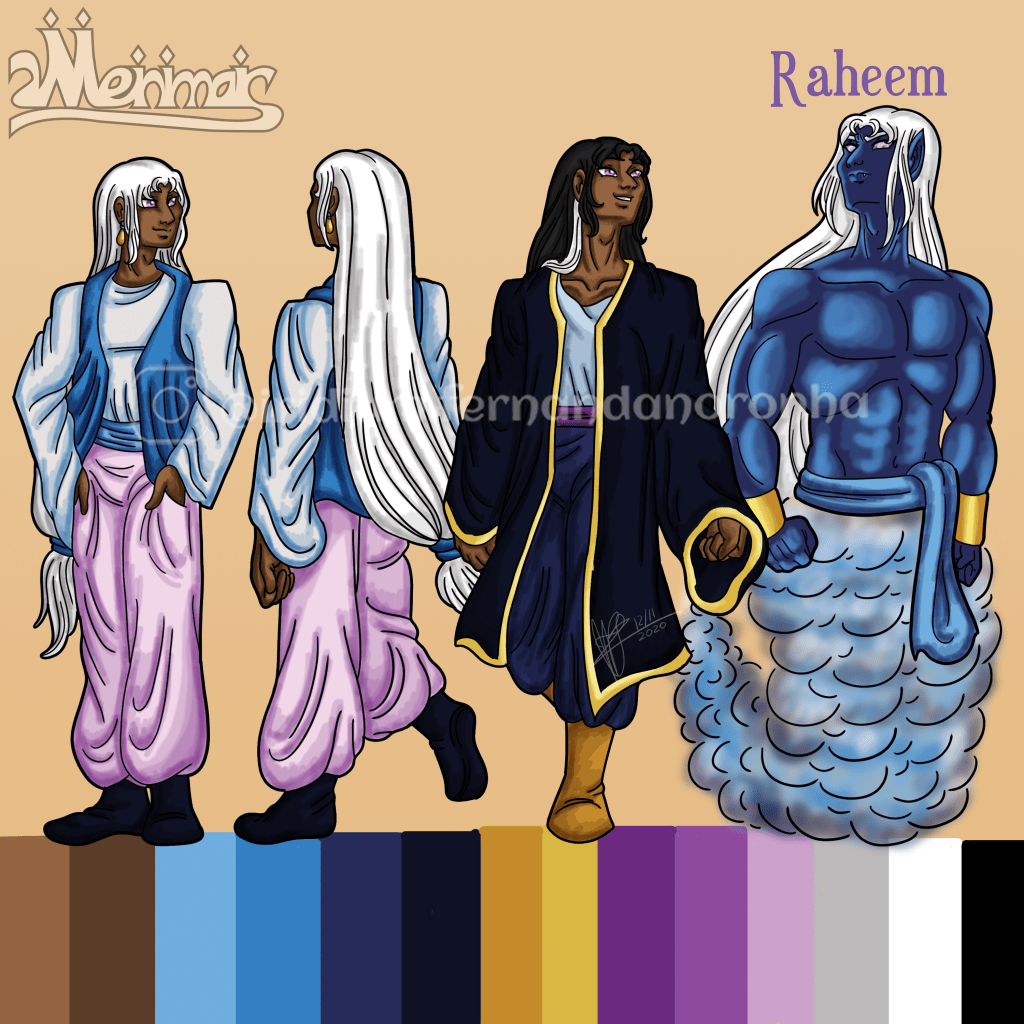
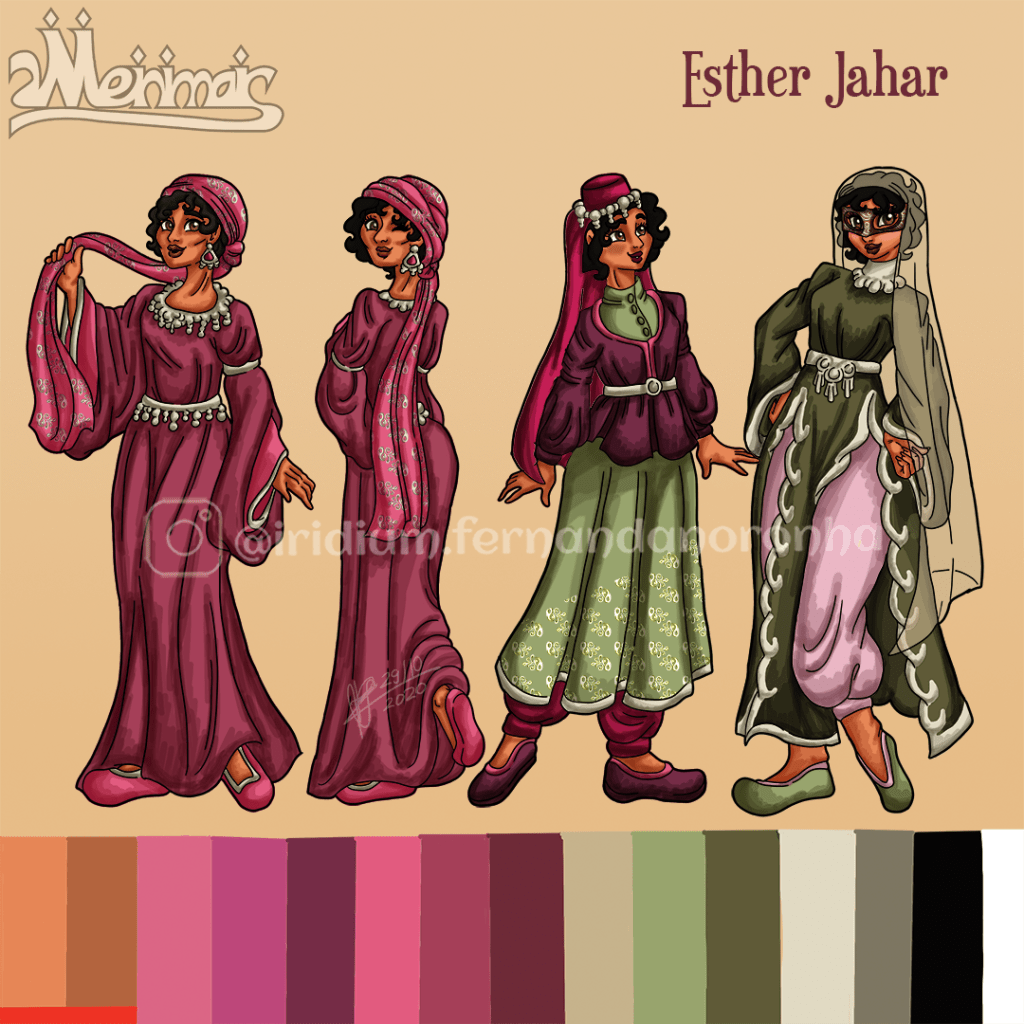
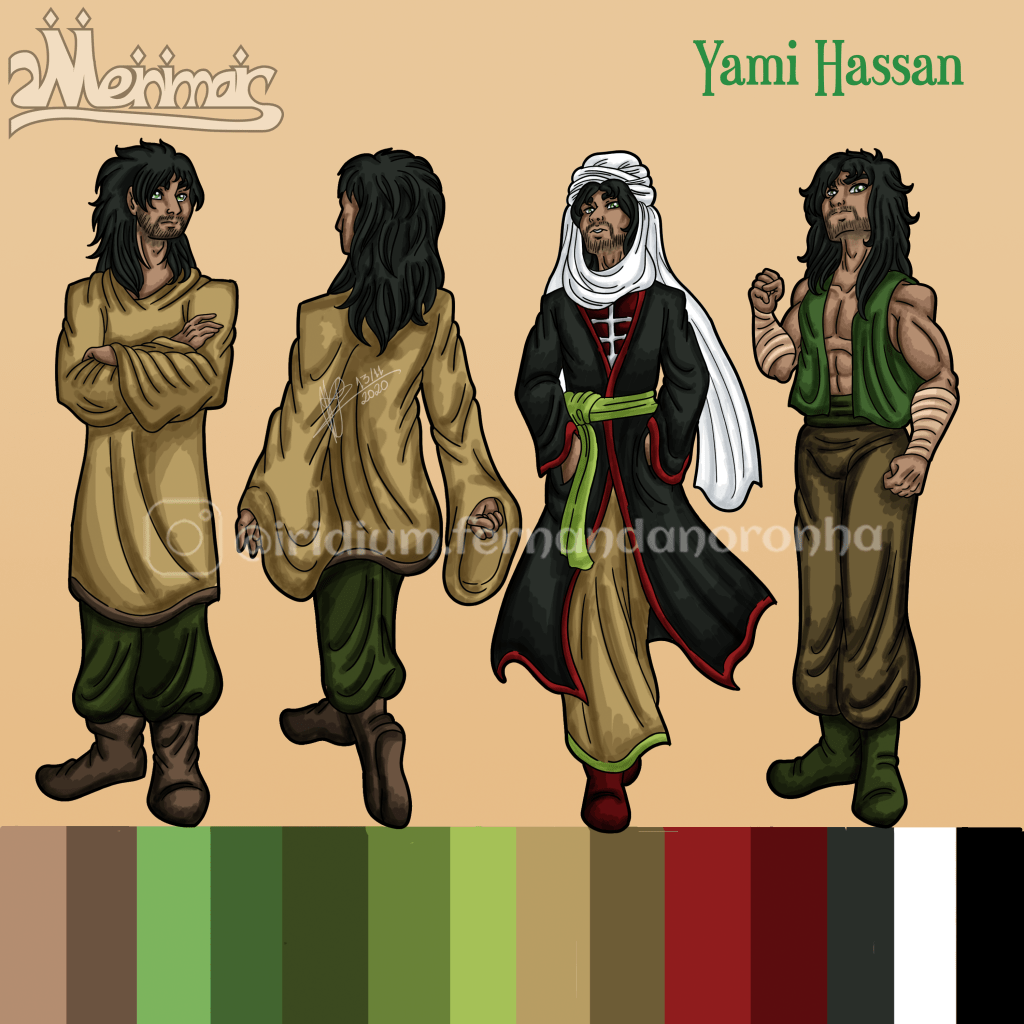
To build up momentum, I had apllied to Brazil’s 2020 Comic Con Experience (CCXP 2020) to cover Menmar’s online debut. Since all local events and gatherings were banned due to the lockdowns, the only option we had were streamings and online chats as forms of gathering.
And thus, Menmar debuted on December 4th, 2020 and my original schedule was to release a chapter every forthnight. When I originally planned it, I thought I’d be able to produce 20 to 30 coloured pages in 14-15 days, so that I’d finish Menmar in a year. Unfortunately, that wasn’t the case.
Post-pandemic, Gastronomy and Hiatus (2021-2023)
I didn’t manage Menmar the way I thought I’d do; the height of pandemic isolation brought about a large volume of paid work for me, which made it difficult to keep Menmar’s workflow going. Also, the publicity market’s struggle gave a direct hit in my designer career, for most of the places I worked went bankrupt from 2020 to 2022, which made it impossible for me to build a stable career as a designer.
However, when the pandemic finally began to wane and lockdowns were over, so it was my work demand. My income took a drastic fall, which affected my will to continue to work on Menmar, and I began looking for work elsewhere to make ends meet.
In 2022, I decided to follow an old dream of mine – working as a professional cook and pastry chef. So, I took a Gastronomy course while working in the field. Thus, Menmar briefly went to the shelves to give its place to Brigadier Bits, which ran weekly on my Instagram from 2022 to 2023.

This series helped me keeping my drawing and comic book creation skills up-to-date, and it also opened up doors for other projects, three of which were fully comissioned: Aylie Anthology, (2023-2025) Oneiropolos & ChimiChronicles (2024) and La Miseràble (2024-2025).
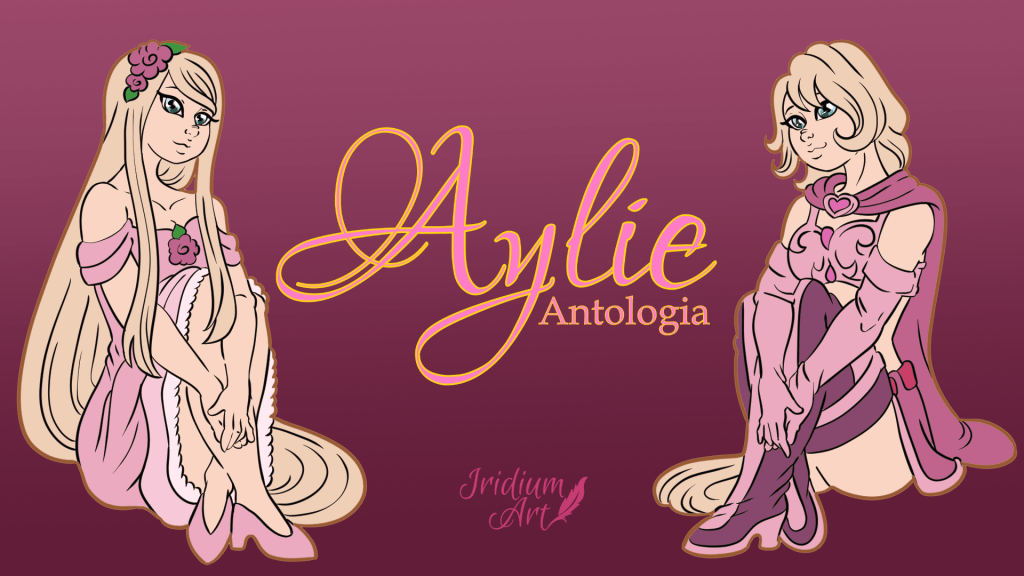

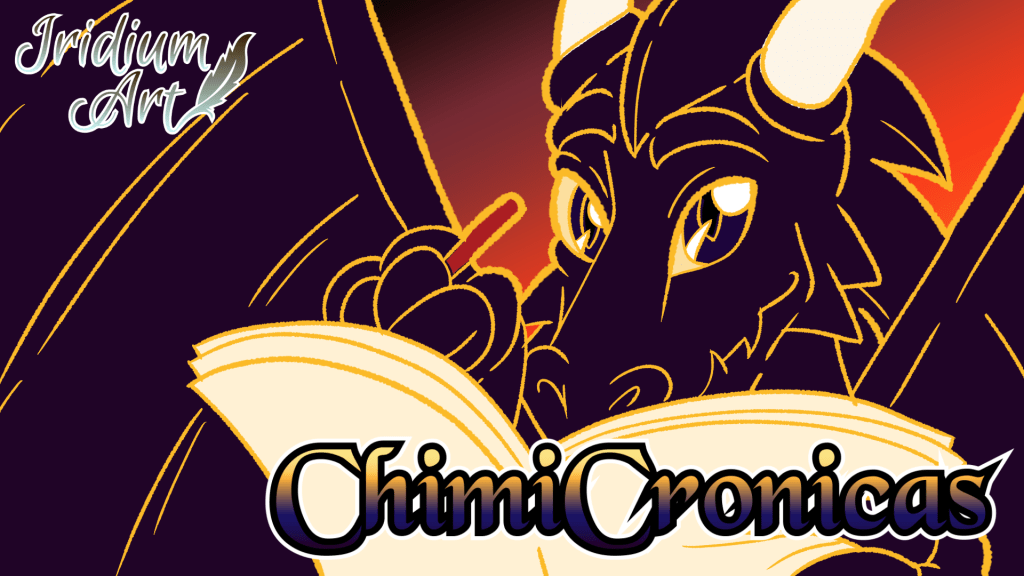
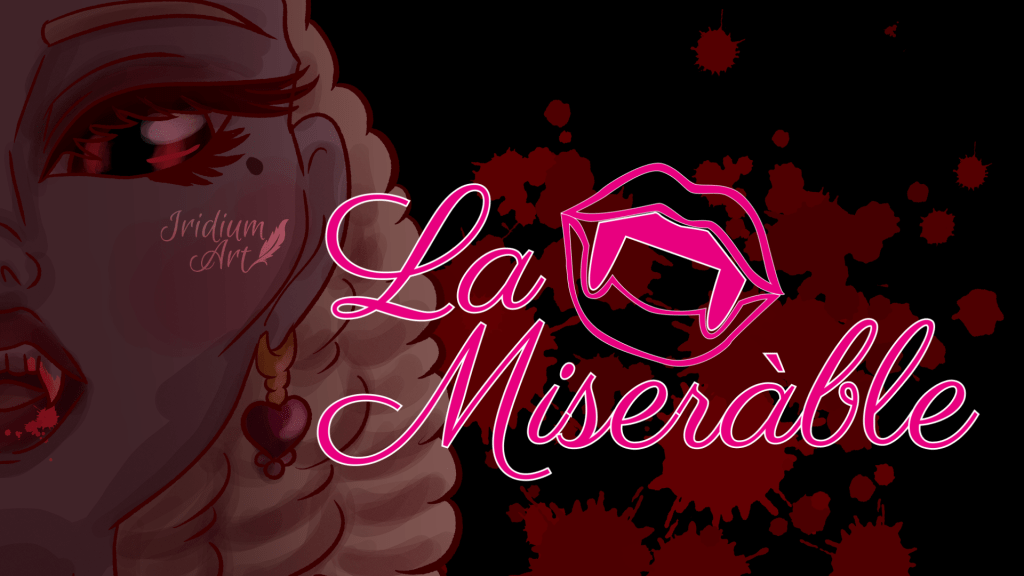
The sudden increase of completed projects in my catalogue, along with having somewhat steadier jobs gave me a sense of purpose, routine and gave me back the confidence I needed to work on Menmar again.
Return to Menmar and Current Status (2023-Present)
While I worked in several other projects (see previous topic), I usually did monthly illustrations of Menmar in order to remind myself to get back to work in it as soon I was able to. I decided to further research and expand the lore before getting back to it.

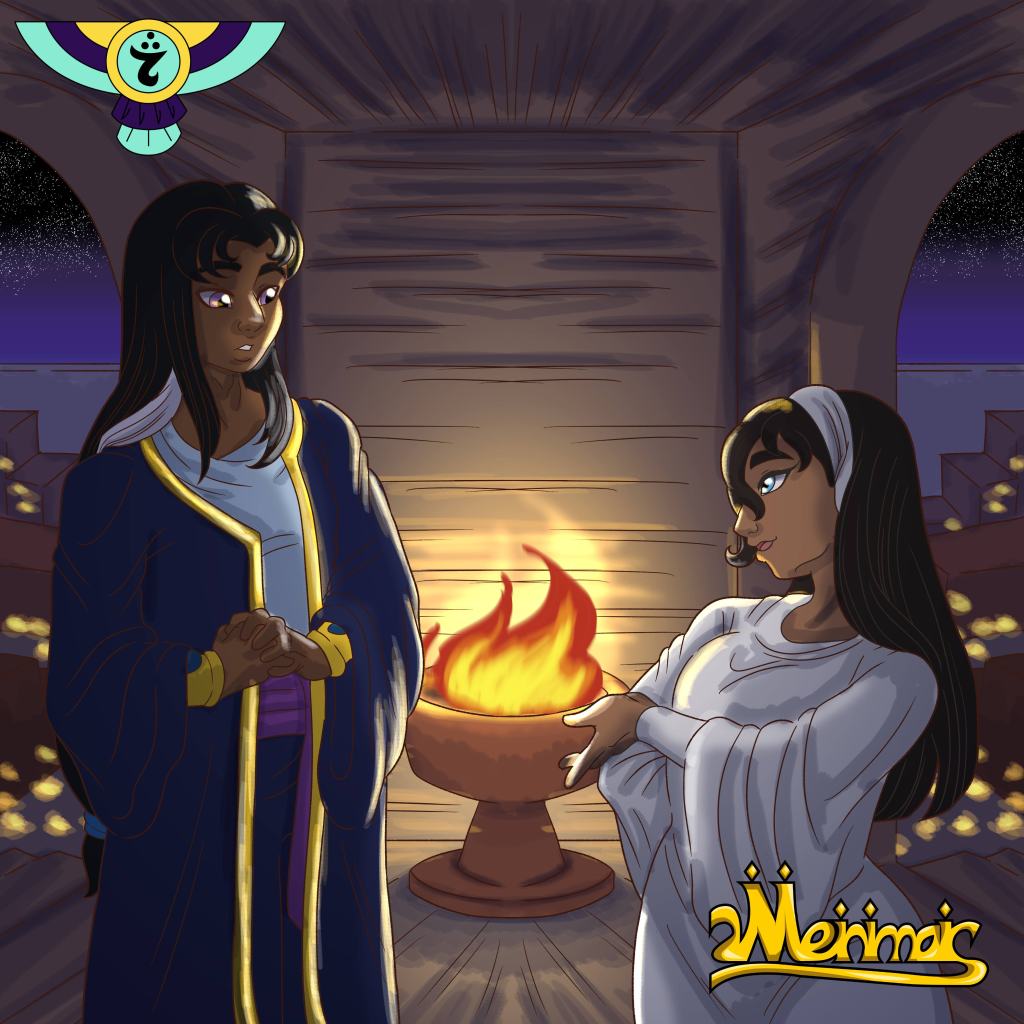
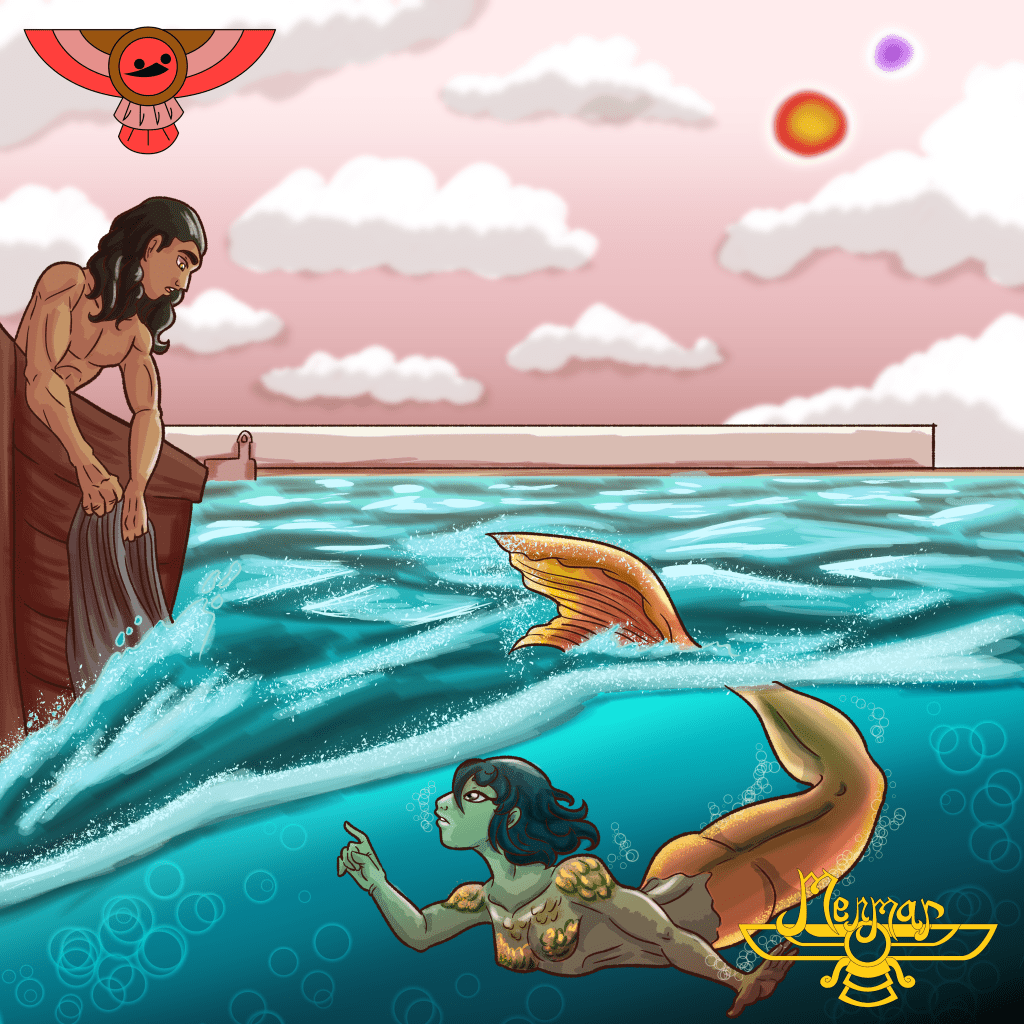
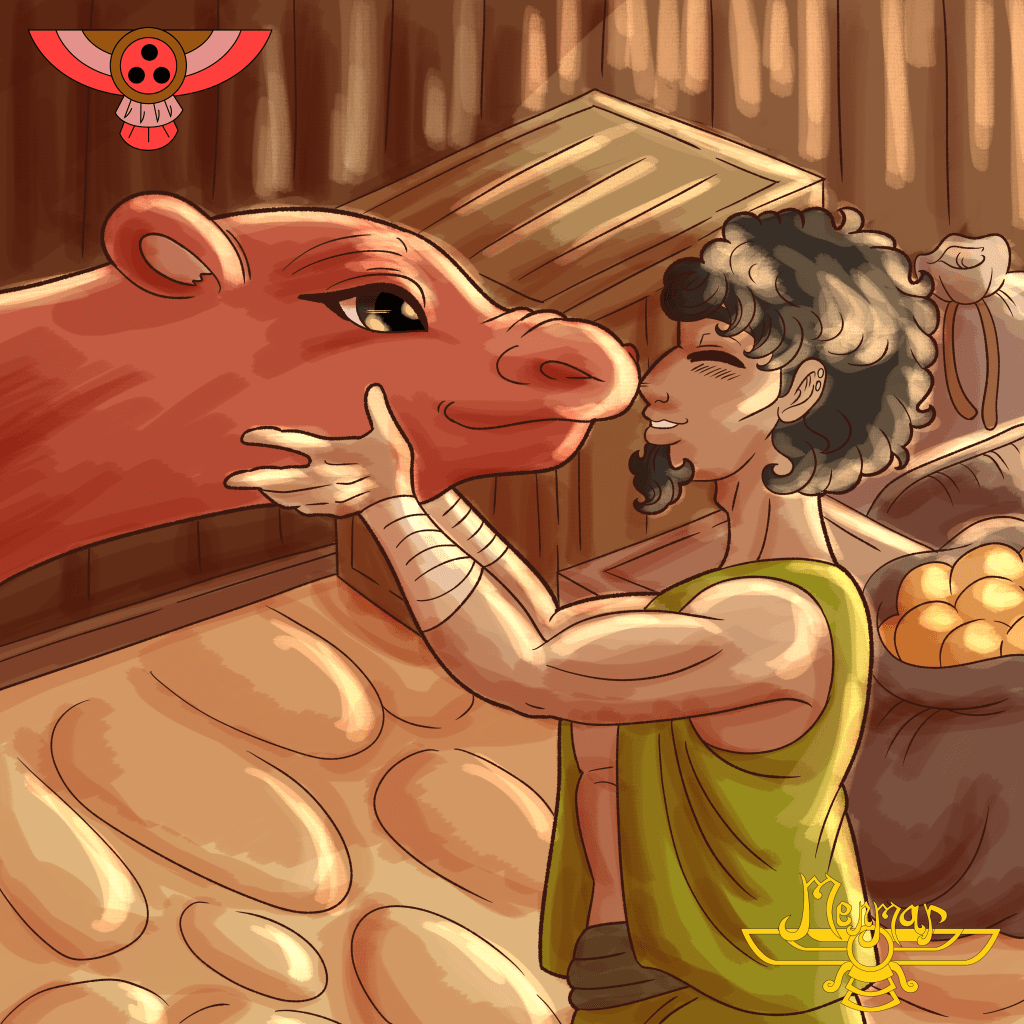
Around April 2023, Menmar caught the eye of digital influencer BernardoLQN, whose streams are mainly and heavily focused on reading, reviewing and marketing Brazilian-made comic books, manga and comic strips with the intent of strenghtening and amplifying the national artistic scene. That event was one of the catalysts for Menmar’s return, beginning with the logo revamp.
In January 2024, I announced Menmar’s return along with the completition of several other projects, which were set to keep me busy for an entire year, maybe two. Thanks to the renewed interest and the second income source I was having, I felt it was the perfect time to get back to the scene.
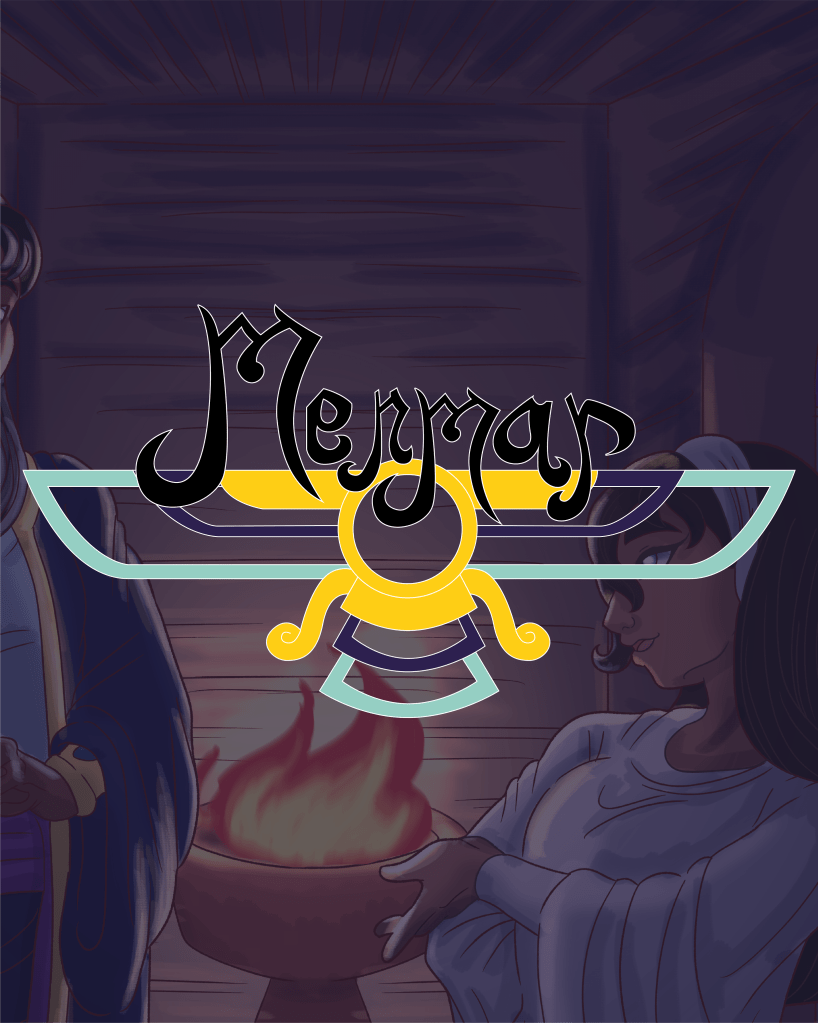
On March 2024, however, I once more changed trade paths and began my studies to become a public servant in Brazil, which led to me working home office again. I juggled my studies with my artworks, finishing project after project while running test after test.
As my rankings and employment chances improved, I saw myself being invited to become part of Black Buffalo Publishing‘s team this July, due to the owner’s interest in Aylie Anthology’s From Drylands to Lax Wires. Since I had already finished five projects and Menmar was the first on my list of priorities, I arranged a deal to work in it by continuing the production from where I stopped + redrawing/remastering and soft-retconning the previous chapters to better suit them for volume compiling and publishing.
What’s Next for Menmar?
Menmar is currently on Chapter 10, with Chapter 11 under production; I needed to take a respite from both studying and drawing to avoid burnout. Now, all that there’s left is to push forward in production until Chapter 13.
Then, the soft-retconning and remastering for the Prologue until Chapter 7’s first few pages will be under works. With these Chapter and the addition of extra materials for the volume’s insides, Menmar is scheduled to hit Black Buffalo Publishing’s shelves on the first quad of 2026, probably around February-March 2026.
After that, there will be a quick halt in Menmar just for me to work on an oneshot project in collaboration with Black Power’s author, Denny Rodrigues, expanding the lore of one of his acclaimed characters – I won’t tell you about it… Yet. There’s much to be done prior to that.
The Volumes will be published monthly, each volume holding up to 4 chapters each (maybe 5 in the first one, it depends on the total amount of pages), totalling seven volumes. After the first volume is published, the free-to-read version of Menmar will be removed from all platforms it was once featured.
2026 is the year Menmar’s story will be one and done – however, it will be far from over… Stay tuned for more, and thank you for being with me for all those years.
Kind Regards,
IridiumArt.

 Iridium Art
Leave a comment